Design and modeling of advanced optical fibers
Funded by: Relativity Networks Inc.
Design and modeling of advanced optical fibers are crucial for driving innovation in modern photonics. By understanding and engineering fiber geometries, materials, and guiding mechanisms, one can tailor light propagation to achieve unprecedented performance in communication, sensing, and laser systems. This project enables the development of low-loss, high-power, and application-specific fibers which could pave the way for breakthroughs in next-generation networks, biomedical diagnostics, and quantum technologies.
MOFlab focues on:
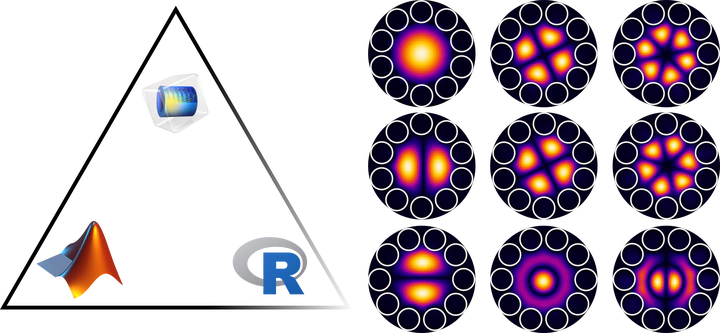
- Accurate modeling of complex hollow-core anti-resonant fibers
- Model various complex hollow-core fiber geometry
- Single-mode fiber
- Multi-mode fiber
- Understand and model various physical loss mechanisms
- Confinement loss
- Surface scattering loss
- Micro-bend loss
- Macro-bend loss
- Model various complex hollow-core fiber geometry
- Modeling speciality optical fibers
- THz fibers
- Hollow-core fiber sensors
- Metamaterial fibers
- Surface plasmon fibers
- Higher power fiber lasers
- Machine learing in fiber optics
- loss prediction using different ML algorithms
- Optimize complex geometry of advanced optical fibers
- Characterize hollow-core fibers
- Loss characterization
- Dispersion measurement
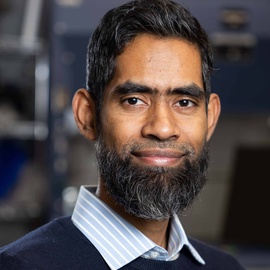
Md Selim Habib
Assistant Professor of Electrical Engineering
Hollow-core fibers; Fiber sensors; Ultrafast nonlinear optics
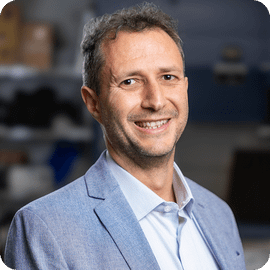
Rodrigo Amezcua-Correa
Professor of Optics; CTO, Relativity Networks Inc.
Hollow-core fibers; High power fiber lasers; Optical communication

Posts
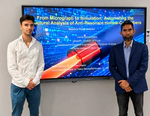

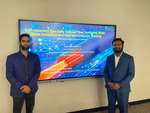
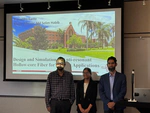
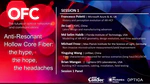
Dr. Habib presented an invited talk in ‘Anti-Resonant Hollow Core Fiber: The Hype, The Hope, The Headaches’ which was presented in March 15, 2026 at the Los Angeles Convention Center, Los Angeles, California, USA. The link of the talk here.
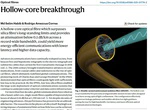
Dr. Habib has been invited to give a talk on HABANERO – Revolutionizing the Future of Optics with Hollow Core Fiberat the IEEE Summer Topticals. Date: 13-15 July, 2026, Tulum, Mexico. You can click here to know about the invited talk.



Dr. Habib has been invited workshop presenter in ‘Anti-Resonant Hollow Core Fiber: The Hype, The Hope, The Headaches’ at OFC 2026, which is scheduled from 15-19 March at the Los Angeles Convention Center, Los Angeles, California, USA. OFC workshops provide an opportunity for attendees to interact informally on particularly compelling technological issues. You can click here to know about the invited talk.